NVIDIA Expands Isaac Robotics Platform to Accelerate Humanoid AI Development
NVIDIA has expanded its Isaac robotics platform with new simulation assets, AI training frameworks, real-time runtime software, and safety technologies. The announcement strengthens the infrastructure for developing humanoid robots but leaves important questions about real-world reliability and deployment.
NVIDIA's latest robotics expansion signals a shift toward integrated physical AI
October 22, 2026 | AAT Intelligence Analysis
NVIDIA is expanding its role in artificial intelligence beyond large language models and data center computing into the infrastructure used to develop intelligent physical machines.
At GTC Berlin on October 21, 2026, the company announced updates to its Isaac robotics platform, introducing new capabilities for simulation, robot learning, training data generation, runtime execution, and safety engineering.
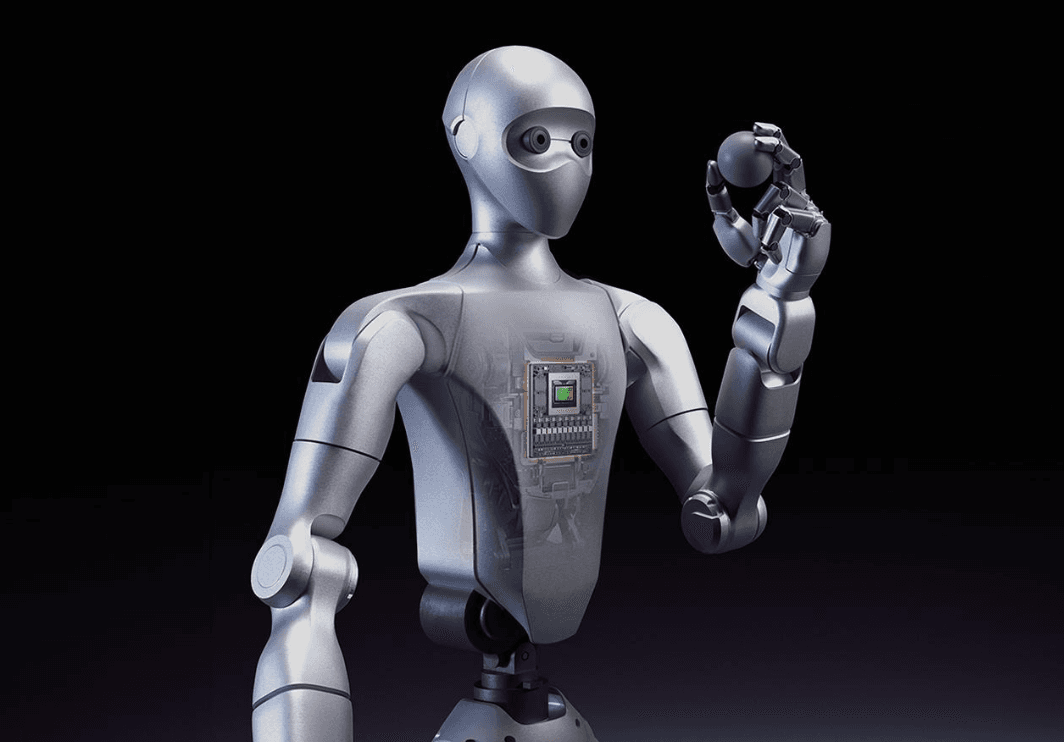
The announcement also featured Agile Robots' Agile ONE SN, a humanoid reference platform integrating NVIDIA Isaac GR00T software with Jetson Thor onboard computing.
Taken together, these developments indicate NVIDIA's ambition to provide a more complete technology stack for developing and deploying autonomous robotic systems.
For the robotics industry, the critical question is whether these tools can meaningfully reduce the complexity of transferring learned behaviors from controlled simulation environments to unpredictable physical settings.
What NVIDIA announced
The expanded Isaac ecosystem introduces several major components.
Isaac Lab 3.0: A generally available, open-source framework supporting large-scale robot policy training and reinforcement learning. It integrates advanced physics simulation capabilities, including NVIDIA PhysX and Newton.
Isaac OS: An open-source runtime framework built on NVIDIA Holoscan that connects AI models, sensors, control systems, and robotic hardware. The framework is designed to support deterministic, real-time operation.
SimReady Central Library: A collection containing more than 2,000 simulation-ready robotics and industrial assets. These resources can help developers construct virtual testing environments without creating every digital component independently.
Human 1M Dataset: A dataset of human activities incorporating synchronized multi-view video and three-dimensional hand tracking. Such information can support research into human motion understanding and robot manipulation.
DGX Station workflows: Three open-source reference workflows covering reinforcement-learning refinement of GR00T models, dexterous manipulation training, and Cosmos world-model post-training.
These components collectively address several stages of the robotics development pipeline, from generating training data to executing learned policies on physical machines.
Agile ONE SN: A reference platform for humanoid research
One of the central announcements was Agile Robots' Agile ONE SN humanoid platform.
The system combines a humanoid body with NVIDIA Jetson Thor computing, Isaac GR00T software, tactile robotic hands, and multiple sensing technologies.
According to the announced specifications, the reference platform includes:
- A 1.40-meter humanoid body weighing approximately 40 kilograms.
- Thirty-one degrees of freedom in the body.
- Two five-finger robotic hands, each providing 20 degrees of freedom.
- NVIDIA Jetson Thor onboard computing.
- Camera, lidar, and inertial sensing capabilities.
The platform is intended to help researchers integrate perception, movement, manipulation, and robotic control into a common development environment.
Agile ONE SN is scheduled for availability in early 2027. That timeline is important: its announcement should not be interpreted as evidence that the reference system has already achieved widespread commercial deployment.
Why simulation matters for physical AI
Training robots presents challenges that differ substantially from training language models.
While language models primarily process digital information, physical robots must interact with environments governed by mechanical forces, sensor limitations, uncertainty, and potentially dangerous operating conditions.
A robot handling unfamiliar objects must estimate their position, determine an appropriate grasp, coordinate its joints, and adjust to unexpected movements.
Collecting sufficient real-world experience for these tasks can be expensive, time-consuming, and potentially hazardous.
Simulation provides an alternative environment in which developers can generate training experiences and test control policies before physical deployment.
NVIDIA's expansion of Isaac Lab and its simulation-ready assets could make these workflows more accessible and scalable.
However, simulation performance cannot be treated as equivalent to real-world reliability.
Differences in object friction, lighting, sensor noise, material properties, and contact dynamics can cause policies trained in virtual environments to behave differently on physical robots.
This challenge, commonly known as the simulation-to-reality gap, remains a fundamental obstacle in autonomous robotics.
Safety becomes a central engineering requirement
As robots become more autonomous, safety must extend beyond mechanical design into AI decision-making, perception, and control.
NVIDIA is positioning its Halos technology as part of a broader safety architecture for autonomous machines.
The company reported that organizations including Agility, Dexory, FORT Robotics, and KION are integrating Halos-related technologies into their safety systems.
This is significant because future industrial robots may need to operate in spaces shared with human workers rather than remaining entirely within fixed safety barriers.
Nevertheless, the availability of safety infrastructure does not independently establish that every robot using it satisfies applicable safety standards.
Safety performance depends on the complete system, its operating environment, engineering controls, validation procedures, and deployment conditions.
Industrial adoption and the broader ecosystem
NVIDIA also identified industrial robotics companies using different parts of its technology ecosystem.
ABB Robotics is incorporating Omniverse capabilities into its simulation and virtual commissioning workflows, while KUKA is using related technologies for factory simulation.
Other organizations, including Sereact, NEURA Robotics, and Humanoid, are applying NVIDIA technologies to robot learning, perception, or industrial development.
These integrations suggest growing interest in common development infrastructure across robotics applications.
They do not, however, establish uniform performance improvements across manufacturers.
Each deployment has different hardware requirements, operational constraints, and evaluation criteria.
AAT Intelligence assessment: Infrastructure is advancing faster than proof of general-purpose autonomy
The most important implication of NVIDIA's announcement is not that humanoid robots have suddenly become fully autonomous.
Rather, it is that the development infrastructure supporting physical AI is becoming more integrated.
NVIDIA is connecting compute hardware, robotic foundation models, training data, simulation tools, and deployment software within a wider ecosystem.
This approach could help robotics developers reduce integration burdens and accelerate experimentation.
It may also increase NVIDIA's influence over the software and computing platforms that future robotics companies depend on.
Yet the commercial and technical outcomes remain uncertain.
Three questions will be particularly important:
First, can robot policies generalize? Systems trained on selected tasks must demonstrate reliable performance across unfamiliar objects, environments, and operating conditions.
Second, can safety be independently validated? Commercial deployment requires more than simulated success. It demands repeatable testing, failure analysis, and appropriate system-level safeguards.
Third, can the technology deliver economic value? Improvements in robot learning must translate into acceptable operating costs, maintainability, task productivity, and deployment complexity.
The industry will need stronger comparative benchmarks and independently reproducible evidence to assess these questions.
Outlook
NVIDIA's October 2026 announcement strengthens the technical foundation for physical AI development.
The combination of Isaac Lab 3.0, Isaac OS, simulation assets, robotics datasets, and reference humanoid hardware provides developers with an increasingly connected environment for building autonomous machines.
The next meaningful milestone will not simply be the release of more advanced models or more capable humanoid hardware.
It will be demonstrated, independently evaluated improvements in real-world task performance, safety, adaptability, and deployment economics.
AAT Intelligence perspective: The robotics industry's progress should be measured not only by what machines can demonstrate in controlled settings, but also by how consistently, safely, and economically they perform in the real world.
Sources
Topics
- Robotics
- AI
- Computer vision
- Infrastructure
Related
From Technology Transfer to Global Chip Powerhouse: How Taiwan Built Its Semiconductor Industry and What Comes Next
Oct 13, 2026 · 13 min read
Why a Chipmaker Is Buying an AI Research Lab: Inside AMD’s $8.2 Billion World Labs Bet
Sep 29, 2026 · 4 min read
NVIDIA Is Moving AI-Agent Security Into the Infrastructure Layer. What Changes?
Sep 28, 2026 · 3 min read