From Technology Transfer to Global Chip Powerhouse: How Taiwan Built Its Semiconductor Industry and What Comes Next
Taiwan’s semiconductor rise began with government-backed research, technology transfer and engineers trained overseas. Decades later, companies such as TSMC and UMC sit within a global chipmaking ecosystem. AAT Intelligence examines how it was built, why the world depends on it, and the risks shaping its future.
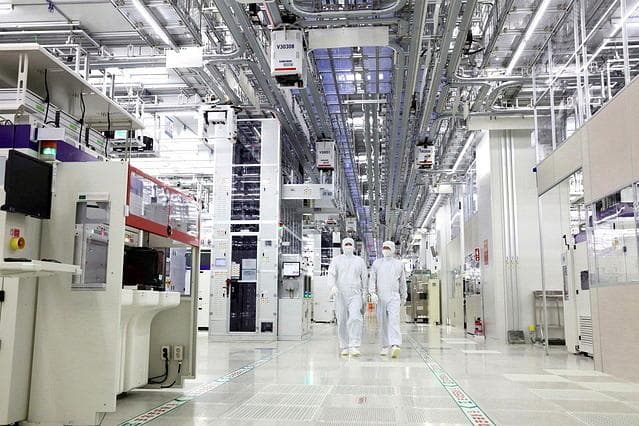
Taiwan's semiconductor industry did not begin with TSMC, nor did its global influence emerge from a single technological breakthrough.
Its development was the outcome of a much longer process involving government planning, overseas technology transfer, scientific research, industrial experimentation and the deliberate creation of commercial manufacturing capacity.
Today, Taiwan occupies an extraordinary position in the global semiconductor economy. Its companies manufacture processors used in smartphones, artificial intelligence systems, high-performance computing, communications infrastructure and numerous industrial applications.
At the centre of this ecosystem is Taiwan Semiconductor Manufacturing Company (TSMC), a business established in 1987 that helped transform the relationship between companies that design chips and those that manufacture them.
But the history behind that transformation reveals something more consequential than the success of one corporation.
Taiwan's rise demonstrates how technological knowledge can be acquired, institutionalised, commercialised and progressively improved until it becomes an industrial capability of global significance.
It also raises an important question: can the manufacturing ecosystem that enabled Taiwan's success maintain its leadership as geopolitical competition, artificial intelligence, rising production costs and industrial diversification reshape the semiconductor industry?
Before TSMC: The Search for a New Industrial Direction
The origins of Taiwan's modern semiconductor industry lie in the economic and industrial decisions of the 1970s.
Semiconductor technology itself was not invented in Taiwan. Many foundational developments in transistor and integrated-circuit technology originated in the United States, while semiconductor capabilities also developed in Japan and Europe.
Taiwan's achievement was different: it systematically developed the knowledge and manufacturing capacity required to participate in an increasingly sophisticated industry.
A critical institution was the Industrial Technology Research Institute (ITRI), established in 1973.
ITRI became an important bridge between publicly supported research, technology acquisition, engineering education and private-sector commercialisation.
According to ITRI's historical records, an influential meeting took place in 1974 involving Taiwanese government officials, research leaders and Wen-Yuan Pan, an executive associated with Radio Corporation of America (RCA).
The discussions helped establish the direction of an integrated-circuit development programme.
The significance of this decision was that Taiwan did not attempt to build a modern semiconductor industry through factory investment alone.
Its initial strategy also involved obtaining technical knowledge, developing skilled personnel, testing manufacturing processes and building institutions capable of converting research into production.
The Engineers Sent to the United States
In 1976, ITRI signed an integrated-circuit technology-transfer and licensing agreement with RCA.
As part of this programme, 19 specialists were selected for training in the United States.
They were not all trained to perform the same function.
According to ITRI, the programme divided participants among different technical specialisations, including integrated-circuit design, manufacturing processes, verification and equipment.
This distinction matters.
Semiconductor manufacturing is not a single operation. It requires technical expertise across circuit design, materials, wafer processing, photolithography, deposition, etching, testing, equipment maintenance and process control.
A country developing these capabilities therefore needs more than individual engineers who understand isolated elements of the process.
It needs teams capable of integrating different technical functions into a reliable production system.
The returning engineers helped establish Taiwan's integrated-circuit demonstration facility.
In 1977, Taiwan launched its first integrated-circuit production line.
ITRI reports that the facility achieved a yield of approximately 70% after six months, exceeding the 50% yield reported for the original RCA facility used as a reference.
Yield measures the proportion of manufactured units that meet the necessary functional or quality requirements. It is a critical determinant of manufacturing efficiency and cost.
The initial production achievements demonstrated that Taiwan was beginning to transform imported knowledge into operational manufacturing expertise.
In 1978, Taiwan produced integrated circuits for electronic watches.
Although these products were technologically modest compared with modern AI accelerators, they represented an important step in building a functioning industrial ecosystem.
From Research Institution to Commercial Industry: UMC
A research institute can demonstrate a technology, but sustained industrial development requires businesses capable of manufacturing products, attracting customers, investing capital and competing commercially.
That transition became visible in 1980.
ITRI established United Microelectronics Corporation (UMC), transferring manufacturing technology and engineering personnel into the new enterprise.
UMC became Taiwan's first integrated-circuit company and one of the early firms associated with Hsinchu Science Park.
The relationship between ITRI and UMC illustrates an important element of Taiwan's industrial model: public research was not intended to remain permanently inside laboratories.
Instead, technical capability could be transferred into commercial organisations that would develop markets and continue technological improvement.
UMC subsequently became part of Taiwan's broader semiconductor manufacturing ecosystem.
The emergence of private industry also helped create demand for supporting businesses in equipment, materials, testing, engineering and other semiconductor services.
Over time, such specialisation would become one of Taiwan's major advantages.
Morris Chang, TSMC and the Foundry Revolution
The next major transformation involved a different approach to semiconductor manufacturing.
In 1985, Morris Chang returned to Taiwan and became president of ITRI.
He brought extensive semiconductor industry experience acquired in the United States, including senior leadership experience at Texas Instruments.
Two years later, in 1987, TSMC was established.
ITRI transferred facilities, technology, equipment and personnel to the new company. Its historical account identifies 98 professionals involved in that transfer.
TSMC's defining commercial innovation was the dedicated semiconductor foundry model.
Before this model became widely established, many semiconductor companies operated as integrated device manufacturers, handling both chip design and manufacturing.
Building and operating a semiconductor fabrication plant, commonly known as a fab, required substantial capital investment and complex engineering capability.
TSMC offered a different arrangement.
Instead of designing and selling its own competing application processors, it would manufacture chips based on designs supplied by other companies.
This allowed chip designers to concentrate on architecture, product development and software without bearing the full cost of owning advanced fabrication facilities.
The significance extended beyond TSMC itself.
The dedicated foundry model helped reduce the capital barrier to entry for companies that wanted to design sophisticated semiconductors.
This encouraged the growth of fabless semiconductor companies and contributed to a more specialised global industry.
A semiconductor value chain increasingly emerged in which different organisations focused on chip architecture, electronic design automation, fabrication, packaging, testing and equipment.
TSMC's role was particularly important because it combined manufacturing specialisation with continuous research into increasingly complex production technologies.
Understanding the Difference Between Chip Design and Manufacturing
The distinction between design and manufacturing is essential to understanding the modern semiconductor industry.
Companies such as Apple and Nvidia develop processor architectures and chip designs for particular computing applications.
These designs specify how the integrated circuits should function, including the arrangement and operation of computing units, memory interfaces and other components.
Manufacturing transforms those designs into physical semiconductor devices through highly sophisticated processes performed on silicon wafers.
TSMC's work is not merely mechanical assembly.
Advanced manufacturing involves developing transistor architectures, controlling extremely small features, managing defects, improving yield and coordinating many stages of production.
TSMC also conducts significant research and development in manufacturing processes and advanced packaging.
Therefore, describing TSMC as a company that simply manufactures chips can understate the scale of its technological expertise.
A more accurate distinction is that TSMC primarily provides semiconductor manufacturing and related technologies for customer-designed products rather than competing directly with those customers through its own branded processors.
That relationship has become central to the global computing industry.
Apple, Nvidia and the Expansion of Global Demand
The rise of smartphones, cloud computing and artificial intelligence created enormous demand for increasingly sophisticated semiconductor devices.
Apple's custom processors illustrate the relationship between a chip designer and a manufacturing partner.
Apple develops many of the processors used in its devices, while TSMC fabricates many of those designs.
Nvidia similarly develops GPUs and AI accelerators, while relying on manufacturing partners, particularly TSMC, for advanced fabrication.
Other semiconductor designers also depend on foundry services to produce chips for different markets.
These relationships are not simply about manufacturing volume.
Modern processors require advanced production nodes, high manufacturing yields, memory integration, packaging and reliable access to capacity.
In AI computing, packaging technologies have also become increasingly important because powerful accelerators must communicate with high-bandwidth memory and other system components.
TSMC's advanced manufacturing and packaging capabilities therefore place it in an important position across both consumer electronics and AI infrastructure.
However, the growth of its customers does not establish that TSMC's financial performance or share price will increase indefinitely.
Those outcomes depend on demand, pricing, manufacturing costs, investment requirements, competition and financial-market expectations.
Where Taiwan's Semiconductor Industry Stands Today
The scale of TSMC's business provides one indication of how far Taiwan's industrial model has developed.
According to TSMC's 2025 annual report, the company manufactured 12,682 different products for 534 customers using 305 distinct process technologies.
Its annual manufacturing capacity exceeded 17 million 12-inch-equivalent wafers.
Advanced technologies, defined by the company as 7-nanometre and more advanced processes, accounted for 74% of wafer revenue in 2025.
These figures illustrate the breadth of customers, manufacturing processes and applications served by the company's foundry business.
Yet TSMC is only one component of Taiwan's semiconductor ecosystem.
UMC continues to operate as a significant foundry company. Other Taiwanese businesses participate in chip design, assembly, packaging, testing, materials, equipment and electronics manufacturing.
The ecosystem also depends on international suppliers.
Advanced semiconductor production involves specialised lithography systems, design software, manufacturing equipment, materials and memory technologies supplied by companies in different countries.
Taiwan's success therefore reflects both domestic industrial capability and participation in an interconnected international technology system.
It is neither accurate to describe Taiwan as manufacturing every important semiconductor nor to suggest that its position was achieved independently of global partnerships.
What Taiwan's Success Says About Industrial Development
Several features distinguish Taiwan's semiconductor development.
The first was continuity.
Building industrial capability required years of institutional support, not a single government announcement.
The second was knowledge transfer.
Overseas training provided engineers with practical exposure to technologies and production methods that could later be adapted and improved domestically.
The third was commercialisation.
Research programmes ultimately contributed to companies capable of serving customers and competing in international markets.
The fourth was specialisation.
Taiwan's companies developed expertise in different portions of the semiconductor value chain, creating opportunities for cooperation and industrial clustering.
The fifth was continuous reinvestment.
Semiconductor technologies evolve rapidly, making sustained research, equipment upgrades and manufacturing investment essential.
These observations do not mean that Taiwan's industrial model can be copied without adjustment by another country.
Its development occurred under particular historical, economic and geopolitical circumstances.
Nevertheless, the experience demonstrates that technological competitiveness depends on the combination of skills, institutions, capital, production experience and sustained industrial demand.
The Future: Can TSMC Sustain Its Manufacturing Leadership?
The next phase of Taiwan's semiconductor development presents both opportunities and risks.
Artificial intelligence is creating demand for advanced processors and associated packaging technologies.
At the same time, producing increasingly sophisticated chips requires enormous investment in fabrication plants, equipment, materials, infrastructure and engineering expertise.
TSMC is expanding its international manufacturing footprint.
Its 2025 annual report describes manufacturing expansion in Arizona, Japan and Germany, alongside continued investment in advanced fabrication and packaging capabilities in Taiwan.
International production can bring manufacturing closer to customers and support geographic diversification.
However, it can also introduce higher construction costs, labour challenges, supply-chain complexity and difficulties reproducing the productivity of established industrial clusters.
TSMC acknowledges several of these risks in its own annual disclosures.
Competition also remains significant.
Samsung Electronics and Intel are pursuing foundry technologies and manufacturing strategies intended to attract semiconductor customers.
Chinese semiconductor companies are developing domestic production capabilities under a different set of market and regulatory constraints.
The competitive outcome will not depend on manufacturing-node announcements alone.
Actual production yield, reliability, capacity, customer qualification, cost and system-level performance will determine how technologies translate into commercial results.
A further challenge is semiconductor manufacturing's dependence on reliable electricity, water, specialised chemicals and uninterrupted infrastructure.
Disruption to any of these resources can affect production and expansion plans.
Geopolitics and the Concentration of Manufacturing Capacity
Taiwan's importance to global semiconductor supply chains creates a strategic challenge.
Concentration of advanced manufacturing capacity can provide economies of scale, a highly experienced workforce and operational efficiency.
But geographic concentration can also amplify exposure to regional disruptions.
Tensions across the Taiwan Strait have consequently become a significant subject of attention for governments, investors and technology companies.
Potential risks include disruption to transport, energy supplies, materials, equipment servicing and semiconductor exports.
However, geopolitical exposure should not be confused with a prediction that conflict is inevitable.
The existence of a risk does not establish its probability or timing.
For TSMC, geographic expansion creates a difficult balance: preserving the advantages of its established Taiwanese ecosystem while developing additional manufacturing capacity in other countries.
For customers, diversification may reduce exposure to some regional risks, but it cannot immediately reproduce the capabilities of an entire mature semiconductor ecosystem.
Is Taiwan's Next Challenge Technological or Economic?
Taiwan's semiconductor future will depend on more than whether the next manufacturing node can be introduced.
The industry must address multiple interacting challenges.
First, advanced process development must continue to deliver meaningful improvements in power efficiency, performance, density and manufacturing economics.
Second, packaging and system integration will become increasingly important as computing systems combine multiple chiplets, accelerators and memory components.
Third, the economics of fabrication must remain sustainable despite escalating capital requirements.
Fourth, companies must attract and retain enough engineers to operate increasingly complicated manufacturing systems.
Finally, Taiwan must navigate a global environment in which semiconductors are simultaneously commercial products and strategic national technologies.
Its historical advantage emerged from the successful integration of these kinds of capabilities.
Maintaining that advantage may prove just as difficult as establishing it.
What the Rest of the World Can Learn
Taiwan's development provides important lessons for countries seeking to strengthen their technology industries.
One lesson is that semiconductor capability does not begin and end with constructing a fabrication plant.
Research institutions, engineering education, manufacturing experience, industrial partnerships, financing and market access must work together.
Another lesson is that a country does not necessarily need to participate in every segment of the semiconductor value chain to establish a competitive position.
Opportunities can exist in circuit design, electronics manufacturing, testing, packaging, materials, power systems and supporting software.
For emerging technology economies, including those in Africa, the relevant question may not be how quickly they can replicate TSMC.
It may be which capabilities they can realistically develop, sustain and connect to international supply chains.
Taiwan's history suggests that specialised technical knowledge, long-term institutional coordination and commercial partnerships can form the basis of meaningful industrial development.
It does not demonstrate that such success is automatic or achievable on the same timeline elsewhere.
What Comes Next
Several developments will help determine the future position of Taiwan's semiconductor industry.
These include progress in advanced manufacturing nodes, the commercial scaling of newer packaging technologies, the operational performance of international fabrication facilities and changing customer demand from AI and consumer electronics.
The evolution of semiconductor competition in the United States, South Korea and China will also matter.
So will the ability of Taiwanese institutions to develop the next generation of engineers and researchers.
Financial results will provide evidence about the industry's commercial performance, but revenue growth and stock-market valuations should not be treated as complete measures of technological leadership.
The more consequential indicators are whether Taiwan can continue to develop manufacturing capabilities that customers need, deliver those capabilities reliably and manage the increasing costs and risks of doing so.
Conclusion: The Industry Behind the Chips
Taiwan's semiconductor story began long before TSMC became a globally recognised company.
It involved government officials who made industrial choices, research institutions that transferred and developed technology, engineers who trained overseas, and companies that transformed technical knowledge into commercially viable production.
ITRI's early programmes helped establish the foundations.
UMC demonstrated the transition from public research to commercial manufacturing.
TSMC's dedicated foundry model subsequently transformed how semiconductor companies could organise design and production.
Decades later, the resulting industry occupies a central position in global electronics and artificial intelligence infrastructure.
But the history also provides a warning against assuming that industrial leadership is permanent.
The conditions that enabled Taiwan's rise are changing. AI demand, global manufacturing diversification, industrial competition, capital intensity and geopolitical tensions are creating new opportunities and constraints.
Taiwan's next challenge is no longer simply to build a semiconductor industry. It is to sustain and adapt one of the world's most consequential manufacturing ecosystems in an increasingly competitive and fragmented technological environment.
That is the larger story behind TSMC—and the question that will define the industry's next chapter.
Sources
Industrial Technology Research Institute (ITRI)
Adopting Technical Knowledge from RCA to Develop Taiwan’s IC Capabilities
Taiwan's 1970s semiconductor development, technology transfer from RCA, training of 19 engineers in the United States, and early integrated-circuit production.
Industrial Technology Research Institute (ITRI)
The Birth of Taiwan’s Semiconductor Industry
Historical development of Taiwan's semiconductor industry, the role of ITRI, overseas engineering training, industrial technology transfer and commercialisation.
Industrial Technology Research Institute (ITRI)
Developing Semiconductors From Scratch: Taiwan’s Semiconductor Industry Hall of Fame
Establishment of UMC in 1980, Morris Chang's role, and the formation of TSMC in 1987.
Taiwan Semiconductor Manufacturing Company (TSMC)
TSMC's manufacturing operations, customer base, technology portfolio, advanced semiconductor production and international expansion plans.
U.S. Securities and Exchange Commission (SEC)
Taiwan Semiconductor Manufacturing Company — 2025 Form 20-F
TSMC's business model, financial disclosures, manufacturing investments, operational dependencies and industry risk factors.
Topics
- Semiconductors
- Compute
- AI
- Infrastructure
Related
NVIDIA Is Moving AI-Agent Security Into the Infrastructure Layer. What Changes?
Sep 28, 2026 · 3 min read
Nvidia’s China AI Chip Share Falls to 34%: Huawei’s Rise and the Limits of Market Share
Oct 13, 2026 · 7 min read
Why a Chipmaker Is Buying an AI Research Lab: Inside AMD’s $8.2 Billion World Labs Bet
Sep 29, 2026 · 4 min read