700 Data Centres by 2035: What Would It Take for Nigeria to Keep Up?
Africa has set a target of more than 700 data centres by 2035. For Nigeria, keeping pace will depend on more than adding facilities. It will require reliable power, greater computing capacity, connectivity and the capital to build infrastructure at scale.
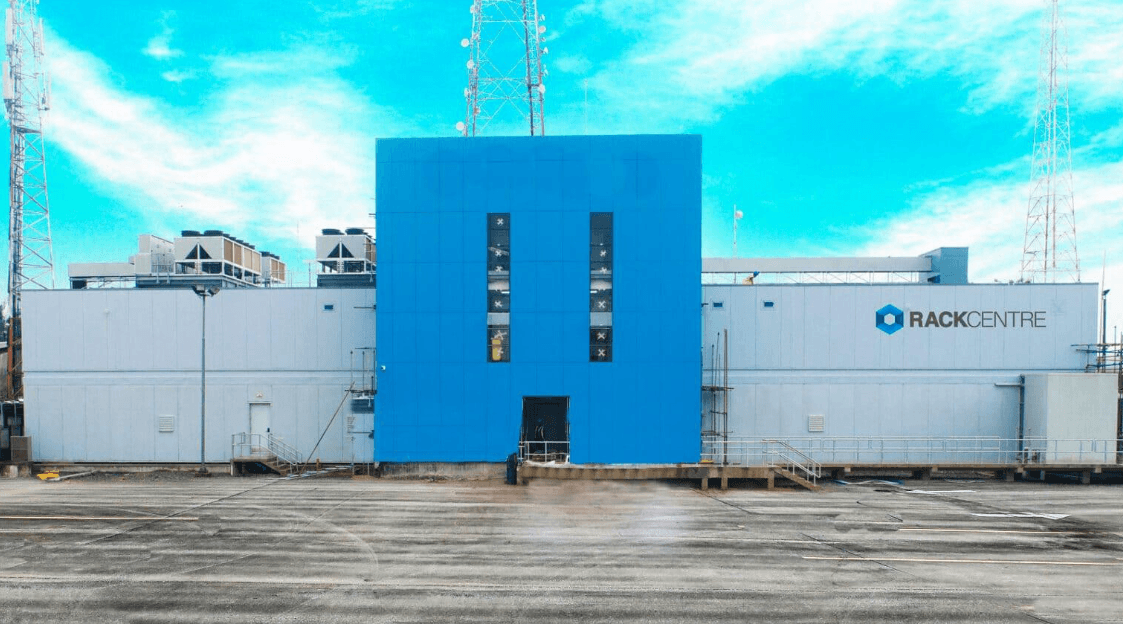
Africa’s digital economy is becoming increasingly dependent on physical infrastructure.
Artificial intelligence, cloud computing, financial services, digital government and cross-border commerce may appear to operate in software, but the systems behind them ultimately depend on data centres, fibre networks, computing hardware and electricity.
That infrastructure gap is now becoming part of Africa’s digital-trade agenda.
In September 2026, Wamkele Mene, Secretary-General of the African Continental Free Trade Area (AfCFTA), said Africa would need more than 700 data centres by 2035. He linked that requirement to a continental digital economy that he said could exceed $700 billion by the same year.
The figure was not introduced for the first time in September. At the AfCFTA Digital Trade Forum in Lagos earlier in 2026, Mene said AfCFTA studies indicated that Africa would require more than 700 data centres by 2035 to process and manage more of its own data.
Nigeria is already one of the continent’s more established data-centre markets. Data Center Map currently lists 29 facilities in Nigeria, compared with 63 in South Africa. The same database is the basis for recent reporting that puts Africa’s total at roughly 260 facilities.
But there is a problem with treating those numbers as a simple race to 700.
A data centre is not a standardized unit of computing capacity. A relatively small facility and a large hyperscale campus can both count as one data centre despite requiring vastly different amounts of electricity, capital and equipment.
For Nigeria, the more important question is therefore not how many of Africa’s future 700 facilities it can claim.
It is how much reliable, connected and economically sustainable computing capacity it can actually build.
29 Data Centres Does Not Mean 29 Equal Facilities
Nigeria’s current count needs to be interpreted carefully.
Data Center Map lists 29 Nigerian data centres, with most of those facilities concentrated in Lagos.
That figure should not be treated as a definitive national census.
Different industry databases use different definitions and inclusion criteria. Some track colocation facilities, others focus on specific categories of infrastructure, and individual buildings or campuses can be counted differently.
That distinction matters because the AfCFTA target itself is expressed in facilities.
If Nigeria built ten small data centres while another market developed three very large campuses, the first country would appear to have expanded faster by facility count even if the second added substantially more computing capacity.
This is why megawatts increasingly matter alongside facility counts.
A data centre’s power capacity provides a better indication of the scale of computing equipment it can support. It is not a perfect measure of actual computing output, but it helps distinguish a small enterprise facility from infrastructure capable of supporting hyperscale cloud or high-density AI workloads.
Recent industry estimates indicate that Africa has already surpassed 500 MW of operational data-centre capacity, with substantial additional capacity under development.
The race to 700 is therefore also a race for megawatts.
There Is No Official Nigerian Share of 700
It would be tempting to take Nigeria’s current facility count and calculate how many of the future 700 should belong to the country.
That would create an impressive number, but not a particularly meaningful one.
AfCFTA has not assigned Nigeria a quota of data centres. The 700 figure describes a continental infrastructure requirement, not a country-by-country allocation.
Nigeria currently represents roughly 11 percent of the approximately 260 African facilities in the dataset underlying the recent count.
Maintaining that proportion in a 700-facility African market would mathematically correspond to roughly 78 facilities.
But 78 should not be interpreted as a Nigerian target or forecast.
The calculation is useful only because it exposes the limitations of counting facilities.
Nigeria could reach 78 facilities without necessarily becoming one of Africa’s strongest computing markets. Conversely, it could remain below that number while developing much larger campuses with considerably more power and computing capacity.
The real infrastructure question is what sits behind the count.
Every Megawatt of Compute Needs Power
For Nigeria, that brings the discussion quickly to electricity.
Data centres require continuous power. Servers cannot simply shut down whenever electricity supply becomes unstable. Cooling, networking, storage and security systems also need to remain operational.
Reliability therefore matters alongside the quantity of electricity available.
The implications become more significant as facilities grow.
A 1 MW data centre and a 50 MW campus are fundamentally different pieces of infrastructure. The larger facility needs access to industrial-scale electricity, together with redundancy and backup systems designed to maintain operations when part of the power system fails.
AI makes this challenge more demanding.
Modern accelerators can concentrate substantial computing capability into relatively small physical spaces. That also concentrates power consumption and heat, increasing the importance of electrical infrastructure and advanced cooling.
This means Nigeria cannot develop a serious AI infrastructure market simply by importing more GPUs.
Those GPUs have to be deployed somewhere.
The facility has to power them.
The cooling system has to remove the heat they generate.
The network has to move enormous volumes of data between systems and users.
And all of that infrastructure has to operate reliably enough for customers to entrust critical workloads to it.
The expansion of computing capacity and the expansion of energy infrastructure are therefore increasingly connected.
Nigeria Is Beginning to Treat Cloud Infrastructure as Economic Infrastructure
Nigeria’s policy environment has recently moved in this direction.
In 2026, the Federal Government unveiled its National Digital Cloud Policy, establishing a framework intended to attract investment into cloud infrastructure, data centres and AI computing capacity.
The policy seeks to strengthen Nigeria’s position as a regional digital-services and hosting hub.
It also recognizes that infrastructure constraints, including access to reliable energy and investment capital, affect the development of the country's cloud ecosystem.
That is significant because it connects Nigeria’s cloud ambitions to a broader infrastructure-investment strategy.
But policy targets do not themselves create capacity.
The success of the strategy will ultimately depend on whether investment commitments become operating infrastructure.
Financing Is Part of the Compute Stack
Data centres are capital-intensive assets.
Before a customer can consume a unit of compute, developers may have to secure land, electrical connections, fibre routes, cooling equipment, backup generation, networking systems and the buildings themselves.
The computing hardware comes on top of that.
For AI infrastructure, accelerators can represent another major capital requirement.
This changes the economics compared with conventional software businesses. Infrastructure providers often have to commit large amounts of capital before the capacity they are building can generate meaningful revenue.
The challenge becomes even more difficult where developers have to solve part of the power problem themselves.
If grid electricity cannot provide the reliability or capacity a project requires, developers may need additional generation, batteries or other backup systems. Those investments increase the amount of capital required to bring each megawatt online.
That means the ability to finance infrastructure becomes part of a country’s ability to compete for compute.
Nigeria does not merely need developers willing to announce data-centre projects.
It needs projects that can reach financial close, secure power, complete construction, attract customers and remain economically viable after they begin operating.
Connectivity Gives Nigeria an Important Starting Point
Power and capital are constraints, but Nigeria also possesses infrastructure advantages.
The country has a large domestic digital market, expanding broadband infrastructure, international connectivity and an established technology and financial-services ecosystem.
A data-centre market becomes more valuable when facilities are connected to dense networks of enterprises, telecom operators, cloud platforms, internet exchanges and international connectivity.
Nigeria’s large domestic digital economy can also provide local demand.
Banks, fintech companies, telecommunications operators, government institutions, e-commerce platforms and increasingly AI developers all require computing and storage infrastructure.
The question is whether Nigeria can combine those demand and connectivity advantages with enough reliable power and investment to support much larger facilities.
Lagos Dominates, but Expansion May Need to Go Further
Nigeria’s current infrastructure is geographically concentrated, with Lagos accounting for most of the facilities listed in major industry databases.
That concentration is understandable.
Lagos combines enterprise demand, telecommunications infrastructure, international connectivity and a large concentration of technology and financial-services companies.
But a substantially larger Nigerian data-centre ecosystem raises another question: whether future capacity should remain concentrated in one metropolitan area.
Geographic diversification can provide resilience. It can also bring computing infrastructure closer to different users and create alternative locations where land, energy and connectivity conditions may be more favorable.
Not every Nigerian city, however, automatically makes sense as a data-centre market.
Infrastructure follows economics.
New locations would need sufficient connectivity, reliable power and enough customer demand to justify the capital required to build them.
The goal should therefore not simply be to distribute facilities around a map.
It should be to identify locations where power, connectivity, land and demand can support sustainable infrastructure.
AI Changes What Nigeria Needs to Build
The 2035 discussion is happening at the same time that the underlying architecture of computing is changing.
Traditional data centres were already significant electricity consumers.
AI infrastructure can demand substantially higher power density.
Large GPU clusters require not only electricity but networking systems capable of moving data rapidly between accelerators. Higher-density hardware also increases cooling requirements.
As a result, a facility designed primarily for conventional enterprise hosting may not automatically be suitable for large AI deployments.
Nigeria therefore has to think beyond generic data-centre capacity.
If AI becomes an increasingly important part of Africa’s digital economy, some of the infrastructure being developed today will need to support much denser computing environments.
That creates another useful distinction.
There is data-centre capacity, and there is AI-ready data-centre capacity.
The second can require different electrical, cooling and networking architectures.
Simply reaching a higher facility count does not guarantee that Nigeria has built enough of it.
Local Data Is Only Part of the Business Case
One argument behind expanding African infrastructure is that more of the continent’s data should be processed within Africa.
Mene has connected the 700-data-centre requirement with Africa’s ability to process and manage more of its own data.
Nigeria’s cloud strategy also reflects a broader interest in developing domestic infrastructure and strengthening digital sovereignty for sensitive workloads.
But Nigeria cannot rely solely on regulation to fill new data centres.
Infrastructure ultimately needs customers.
Local hosting requirements may support demand in particular sectors, but sustainable growth will also depend on whether Nigerian facilities can offer competitive reliability, connectivity and pricing to private businesses, cloud providers and regional customers.
The stronger opportunity would be for Nigeria not only to host Nigerian workloads, but also to provide computing and cloud services to neighboring markets.
What Would Keeping Up Actually Require?
There is no single number that determines whether Nigeria is keeping up with Africa’s data-centre expansion.
Facility count is one indicator.
Installed megawatts are another.
But a more complete assessment would have to examine several systems together.
Nigeria would need significantly more reliable power available at locations suitable for large-scale computing.
It would need continued expansion of fibre and interconnection infrastructure.
Developers would need access to long-term financing capable of supporting capital-intensive projects.
New facilities would need customers willing to commit enough demand to justify construction.
AI-oriented facilities would need electrical and cooling architectures capable of supporting higher-density hardware.
And policymakers would need to maintain an environment in which infrastructure investment can be deployed predictably over many years.
Whether Nigeria can bring all of those pieces together at sufficient scale remains an open question.
700 Is the Headline. Capacity Is the Real Story.
More than 700 data centres by 2035 is an attention-grabbing ambition.
It communicates the scale of the infrastructure Africa may require as cloud computing, AI and digital trade expand.
But the number can also obscure what ultimately matters.
Nigeria does not win this infrastructure race simply by increasing the number of buildings classified as data centres.
A facility without sufficient power cannot provide reliable compute.
Capacity without connectivity cannot efficiently reach customers.
Infrastructure without customers cannot generate sustainable returns.
And AI hardware without the electrical and cooling systems required to operate it does not create an AI infrastructure advantage.
Nigeria already has a meaningful starting position. Data Center Map lists 29 facilities, the country has a large domestic digital market, and public policy is increasingly focused on attracting investment into cloud, data-centre and AI infrastructure.
But the next stage will require a different measurement of progress.
By 2035, the more important question may not be how many of Africa’s 700 data centres are in Nigeria.
It may be how many megawatts of reliable, connected and economically sustainable computing capacity Nigeria has actually managed to bring online.
Sources
Data Center Map
Federal Ministry of Communications, Innovation & Digital Economy
National Digital Cloud Policy announcement
BusinessDay
Africa needs 700 data centres by 2035 to power digital trade under AfCFTA
Topics
- Infrastructure
- Compute
Related
The Economics Behind the AI Data-Centre Boom: What Nscale’s IPO Reveals
Sep 21, 2026 · 10 min read
Nigeria's AI Infrastructure Ambition: What Has Actually Been Built?
Sep 18, 2026 · 9 min read
From Vision to Infrastructure: What Would It Take to Build the Future Elon Musk Shared?
Sep 20, 2026 · 5 min read